- 0 Comments
- Dev International
Food & Beverage Ingredients Manufacturer Growth Tips Now
The Indian pharmaceutical industry is one of the fastest-growing healthcare markets in the world. With rising demand for high-quality medicines, global exports, and advanced drug delivery systems, excipients play a crucial role in ensuring product stability, safety, and performance. Among these excipients, Polyethylene Glycol has become a cornerstone ingredient for modern pharmaceutical formulations.
From oral tablets to injectable drugs and topical creams, Polyethylene Glycol supports improved solubility, enhanced bioavailability, and long-term stability. In this blog, we will explore Polyethylene Glycol India benefits for pharma sector, its applications, advantages, and why choosing the right supplier is critical for pharmaceutical manufacturers.
What is Polyethylene Glycol?
Polyethylene Glycol (PEG) is a polymer compound widely used in pharmaceutical formulations as a solvent, plasticizer, binder, stabilizer, and drug delivery enhancer. It is available in various molecular weights, which determine its physical properties such as viscosity and solubility.
PEG is:
- Water-soluble
- Non-toxic and biocompatible
- Chemically stable
- Compatible with a wide range of active pharmaceutical ingredients (APIs)
Because of these characteristics, Polyethylene Glycol is considered one of the most versatile excipients in the pharmaceutical industry.
Why Indian Pharma Relies on Polyethylene Glycol
India is known as the “Pharmacy of the World.” To maintain global quality standards and meet regulatory compliance requirements, manufacturers depend on reliable excipients. Polyethylene Glycol plays a significant role in:
1. Enhancing Drug Solubility
Many active pharmaceutical ingredients have poor water solubility. Polyethylene Glycol improves solubility, ensuring better dissolution rates and faster therapeutic action. This directly impacts drug effectiveness and patient outcomes.
2. Improving Drug Stability
PEG protects drugs from degradation caused by moisture, oxidation, and temperature fluctuations. For Indian pharma companies exporting to different climate zones, stability is critical.
3. Supporting Controlled Drug Release
Polyethylene Glycol enables sustained and controlled drug release formulations, improving patient compliance and reducing dosing frequency.
4. Ensuring Global Compliance
Pharma-grade Polyethylene Glycol complies with international pharmacopeia standards such as USP, BP, and IP, making it ideal for export-oriented Indian pharmaceutical manufacturers.
Applications of Polyethylene Glycol in the Indian Pharma Industry
Polyethylene Glycol is widely used across multiple pharmaceutical dosage forms. Let’s explore its key applications:
1. Oral Solid Dosage Forms
In tablets and capsules, Polyethylene Glycol acts as:
- Binder
- Plasticizer
- Coating agent
- Lubricant
It improves tablet hardness, smooth coating, and easy swallowing. PEG-based coatings also enhance shelf life.
2. Liquid Formulations
For syrups and oral liquids, Polyethylene Glycol functions as:
- Solvent
- Stabilizer
- Drug distribution enhancer
It ensures uniform distribution of active ingredients, preventing settling or separation.
3. Injectable Drugs
In injectable formulations, Polyethylene Glycol enhances:
- Solubility of poorly soluble APIs
- Stability of biologics
- Safety and compatibility
PEGylation technology, where drugs are attached to PEG molecules, increases circulation time in the bloodstream and improves therapeutic efficiency.
4. Topical and Dermatological Products
Polyethylene Glycol is used in creams, ointments, and gels because it:
- Provides moisturizing properties
- Enhances skin penetration
- Improves product consistency
This makes it ideal for dermatological and cosmetic pharmaceutical applications.
5. Ophthalmic Preparations
PEG is commonly used in eye drops and lubricating solutions. It is:
- Non-irritating
- Safe for sensitive tissues
- Effective in improving viscosity and lubrication
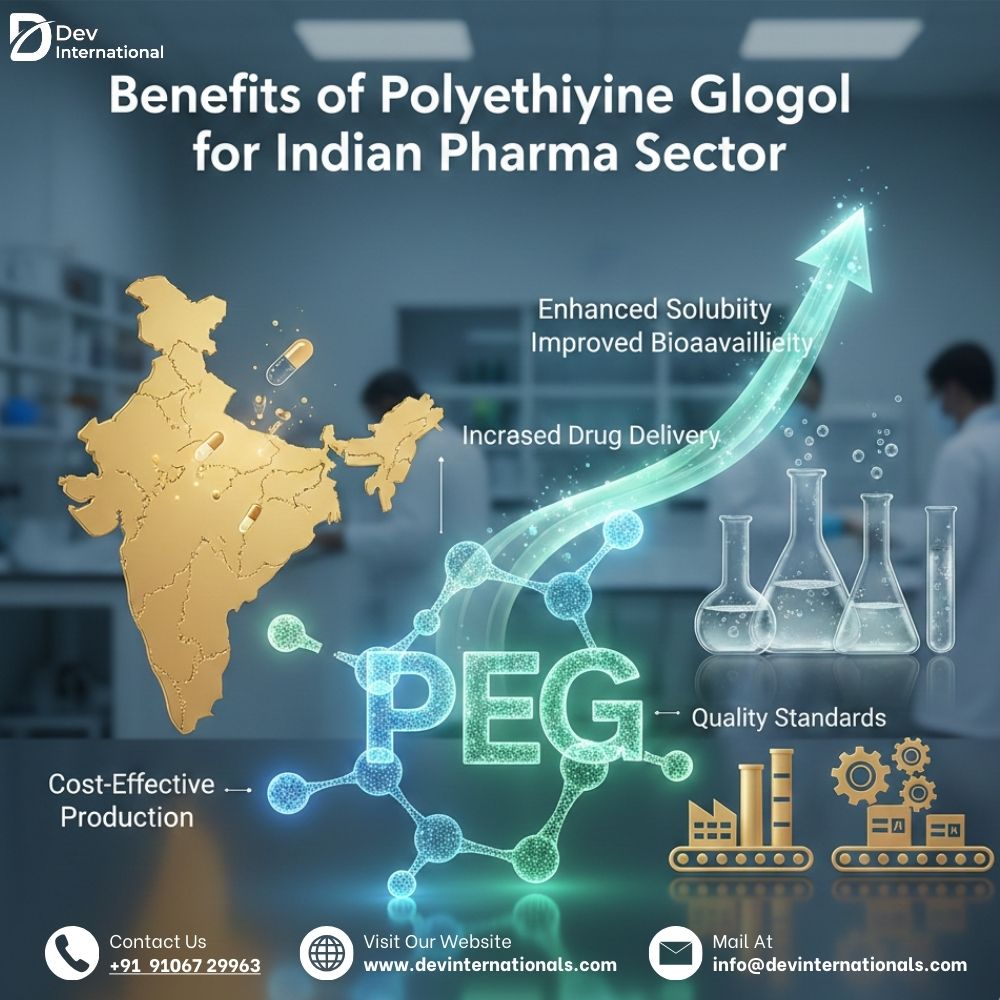
Polyethylene Glycol India Benefits for Pharma Sector
Let’s examine the core benefits that make Polyethylene Glycol indispensable in the Indian pharmaceutical ecosystem.
1. Enhanced Solubility and Bioavailability
Many modern drugs are poorly water-soluble. Polyethylene Glycol improves solubility, which directly enhances bioavailability. This ensures better absorption and faster therapeutic response.
2. Improved Drug Stability
Indian pharma companies distribute medicines across tropical climates. PEG helps maintain drug integrity under temperature and humidity variations.
3. Versatility Across Dosage Forms
From tablets to injectables, PEG adapts to multiple formulations. This versatility reduces the need for multiple excipients, simplifying procurement and formulation processes.
4. Safety and Biocompatibility
Polyethylene Glycol is well tolerated by the human body and approved by major regulatory authorities. Its strong safety profile makes it suitable for long-term and sensitive therapies.
5. Cost-Effective Production
India’s pharmaceutical industry focuses on affordable healthcare. Polyethylene Glycol supports cost-effective production while maintaining high quality standards.
6. Supports Advanced Drug Delivery
Modern drug delivery systems, including sustained-release and targeted delivery mechanisms, rely heavily on Polyethylene Glycol for enhanced performance.
Role of Polyethylene Glycol in Export Growth
India exports pharmaceuticals to over 200 countries. To meet global regulatory requirements, manufacturers need excipients that ensure:
- Consistent quality
- Batch-to-batch uniformity
- Regulatory documentation
- International compliance
Polyethylene Glycol meets these requirements, making it a preferred excipient for export-oriented pharma companies.
Choosing the Right Polyethylene Glycol Supplier in India
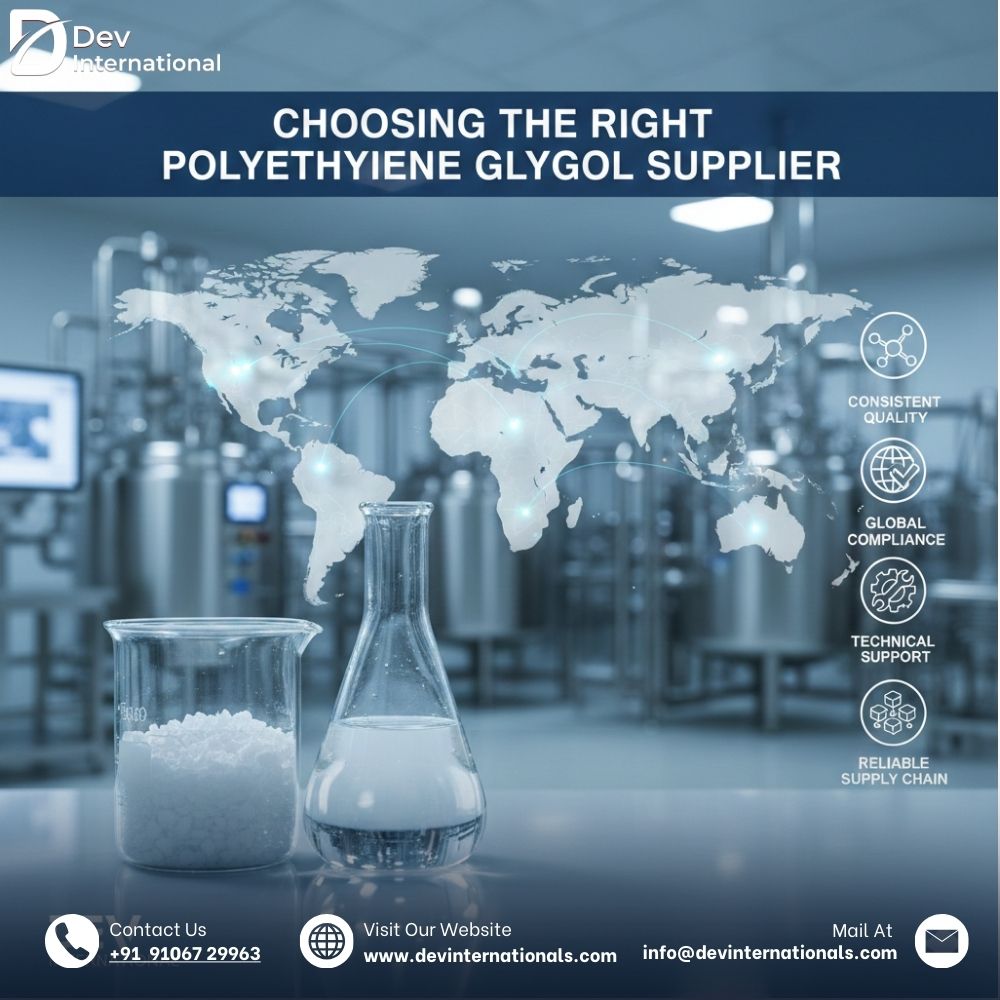
Selecting the right supplier is crucial for pharmaceutical manufacturers. Here are key factors to consider:
1. Consistent Quality Standards
The supplier must provide pharmaceutical-grade Polyethylene Glycol with proper certifications and compliance documentation.
2. Global Regulatory Compliance
Ensure the product meets USP, BP, IP, and other international pharmacopeia standards.
3. Reliable Supply Chain
Timely delivery is essential to avoid production delays. A dependable supply chain ensures uninterrupted manufacturing.
4. Technical Support
A knowledgeable supplier can assist with formulation guidance and product selection based on molecular weight and application.
5. Transparent Documentation
Complete product data sheets, COA, MSDS, and regulatory documents are critical for audits and inspections.
Future of Polyethylene Glycol in Indian Pharma
The future of Polyethylene Glycol in India looks promising due to:
- Growth in biologics and biosimilars
- Increasing demand for controlled-release formulations
- Expansion of generic drug manufacturing
- Rising focus on R&D innovation
PEGylation technology and advanced drug delivery systems will further strengthen the demand for Polyethylene Glycol in the coming years.
Why Polyethylene Glycol is Indispensable for Pharma Innovation
As pharmaceutical formulations become more complex, excipients must offer multifunctional performance. Polyethylene Glycol provides:
- Chemical stability
- Customizable molecular weights
- Wide compatibility
- High safety margin
Its adaptability ensures that it remains at the forefront of pharmaceutical innovation in India.
Polyethylene Glycol India Benefits for Pharma Growth
Polyethylene Glycol India benefits for pharma sector are extensive and impactful. From enhancing drug solubility and stability to enabling advanced drug delivery systems, Polyethylene Glycol plays a critical role in supporting India’s pharmaceutical growth.
With increasing global competition and regulatory scrutiny, choosing high-quality Polyethylene Glycol from a trusted supplier is essential for maintaining product excellence and market leadership.
As the Indian pharmaceutical industry continues to expand, Polyethylene Glycol will remain a key driver of innovation, efficiency, and global competitiveness.