- 0 Comments
- Dev International
Understanding Citric Acid Anhydrous and Its Industrial Uses
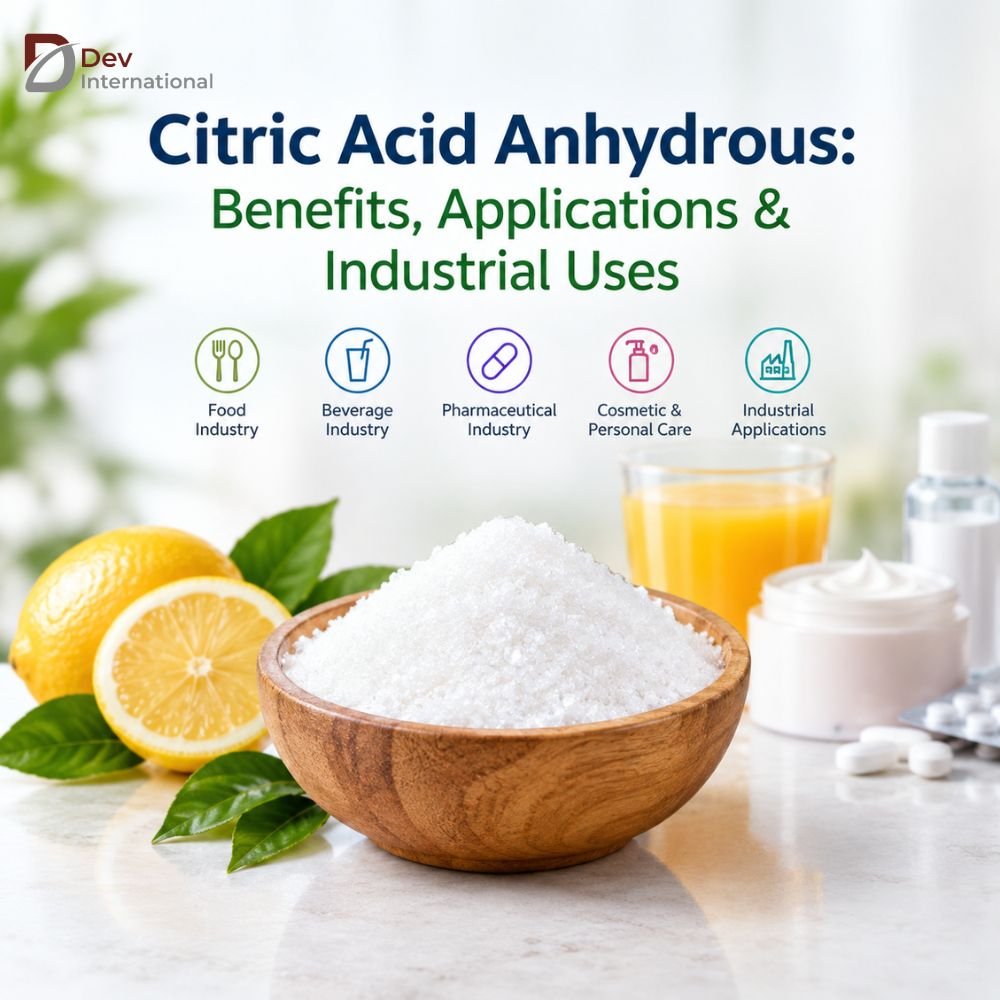
Citric Acid Anhydrous plays an important role in modern food processing, beverage production, pharmaceutical formulations, and various industrial applications. Manufacturers use this versatile ingredient to regulate acidity, support product stability, and maintain consistent formulation quality. As industries look for dependable raw materials, understanding its properties, benefits, and applications helps businesses make informed purchasing decisions.
Unlike citric acid anhydrous that contains water of crystallization, the anhydrous form contains no water of crystallization in its chemical structure. This characteristic makes it a practical choice for formulations where moisture control matters. Moreover, its versatility allows manufacturers to use it across multiple industries, provided they select the appropriate grade for their application.
For food processors, pharmaceutical companies, cosmetic manufacturers, and industrial formulators, choosing the right material and supplier can improve purchasing confidence and support consistent production.
What Is Citric Acid Anhydrous Powder?
Citric Acid Anhydrous Powder is the dry, crystalline form of citric acid that contains no water of crystallization. Citric acid is a weak organic acid commonly used to adjust pH, control acidity, and contribute a tart taste to suitable food and beverage products.
Its chemical formula is C₆H₈O₇. The ingredient generally appears as a white crystalline powder with an acidic taste and good solubility in water. These properties make it useful in applications that require controlled acidity and reliable formulation performance.
Key Properties of Citric Acid Anhydrous
Manufacturers evaluate several properties when selecting this ingredient for commercial production.
- Chemical formula: C₆H₈O₇
- Appearance: Typically a white crystalline powder
- Nature: Organic acid
- Solubility: Readily soluble in water
- Primary function: Acidity regulation and pH adjustment
- Common applications: Food, beverages, pharmaceuticals, personal care, and industrial formulations
The precise specifications depend on the grade and supplier. Therefore, buyers should review the technical data sheet and certificate of analysis before placing an order.
Citric Acid Anhydrous Uses Across Industries
Citric acid serves several functions across manufacturing sectors. Its suitability depends on the product grade, formulation requirements, applicable regulations, and intended end use.
1. Food Processing and Manufacturing
Food manufacturers use suitable food-grade citric acid to adjust acidity and create consistent product profiles. It can also support flavour balance and help manage pH in selected formulations.
Common applications include:
- Confectionery and candies
- Jams, jellies, and fruit preparations
- Sauces, dressings, and condiments
- Processed foods
- Dry seasoning blends
- Packaged food products
For example, a food processor may use it to achieve the desired tartness in a confectionery product. Similarly, a sauce manufacturer may use it to adjust acidity according to a product specification.
Nevertheless, the ingredient alone does not guarantee food preservation or product safety. Manufacturers must validate the complete formulation, processing conditions, and applicable food safety requirements.
2. Beverage Manufacturing
Beverage manufacturers use citric acid to establish the desired acidity and flavour balance. It can contribute a refreshing tart note in products such as fruit drinks, powdered beverage mixes, and selected ready-to-drink formulations.
Applications may include:
- Fruit-based beverages
- Flavoured drinks
- Beverage concentrates
- Powdered drink mixes
- Sports and hydration beverages, where suitable
- Syrups and beverage bases
Moreover, consistent raw material specifications help beverage producers maintain repeatable taste and formulation performance across production batches.
3. Pharmaceutical Formulations
Pharmaceutical manufacturers may use citric acid in suitable formulations as an acidity regulator or as part of a buffering system. Its specific role depends on the formulation design and the quality requirements for the finished product.
Potential applications include selected oral formulations, effervescent products, and other pharmaceutical preparations where the ingredient meets the required specification.
However, pharmaceutical use requires appropriate grade selection, documented quality controls, and compliance with relevant pharmacopoeial or regulatory requirements. Buyers should verify that the offered material meets their intended application standards.
4. Cosmetics and Personal Care
Personal care formulators may use citric acid to adjust the pH of selected products. Maintaining the appropriate pH can help a formulation meet its intended performance and compatibility requirements.
Examples include:
- Shampoos and conditioners
- Facial cleansers
- Body washes
- Creams and lotions
- Selected bath and personal care products
The correct quantity depends on the formulation, target pH, and compatibility of the other ingredients. Therefore, formulators should determine the required dosage through formulation testing rather than applying a universal percentage.
5. Cleaning and Industrial Formulations
Citric acid also has applications in selected cleaning and industrial formulations. Depending on the product design, it can help adjust pH or contribute to the removal of certain mineral deposits.
Potential applications include selected household cleaning products, descaling formulations, and industrial cleaning products.
Its effectiveness depends on the type of deposit, concentration, contact time, surface material, and other formulation ingredients. Before use, manufacturers should evaluate compatibility with metals, coatings, and other sensitive surfaces.
6. Chemical Processing and Other Industrial Uses
Chemical manufacturers may incorporate citric acid into formulations that require acidity control or specific chemical performance. In these applications, purchasing teams should assess purity, particle characteristics, packaging, and compatibility with the production process.
Although the ingredient supports a broad range of uses, not every grade suits every industry. A supplier should provide relevant product documentation so buyers can evaluate suitability before purchase.
What Are the Benefits of Citric Acid Anhydrous?
This ingredient offers several practical benefits when manufacturers select the correct grade and use it within a validated formulation.
1. Effective Acidity Regulation
One of its main functions is to help manufacturers achieve a target acidity level. This matters in food, beverage, personal care, and industrial products where pH influences product characteristics.
2. Convenient Dry Handling
Its crystalline powder form allows manufacturers to weigh and blend the material into many dry formulations. Additionally, the absence of water of crystallization can be helpful when formulation calculations require the anhydrous form.
3. Versatile Industrial Applications
The ingredient supports applications across multiple sectors. As a result, purchasing teams can evaluate it for different production requirements while ensuring they select a grade suitable for each intended use.
4. Supports Flavour Balance
In suitable food and beverage formulations, citric acid contributes a tart taste that can balance sweetness and enhance the intended flavour profile. The formulator must adjust the quantity according to the product’s sensory requirements.
5. Helps Formulators Manage pH
In selected formulations, citric acid can contribute to pH adjustment. This supports the development of products with defined acidity targets, although formulators must test the complete product to confirm the final pH and stability.
6. Supports Consistent Production
When manufacturers use material with consistent specifications, they can improve control over raw material inputs. Regular quality checks, suitable packaging, and reliable supplier documentation further support batch-to-batch consistency.
How to Choose a Citric Acid Anhydrous Supplier
Selecting the right supplier involves more than comparing prices. Buyers should evaluate product quality, documentation, packaging, supply reliability, and the supplier’s ability to meet their business requirements.
Check Product Specifications
Review the technical data sheet for relevant information, including assay, moisture-related specifications, appearance, solubility, and other parameters required by your application. Request a certificate of analysis for the supplied batch where appropriate.
Confirm the Required Grade
Food, pharmaceutical, cosmetic, and industrial applications may require different specifications. Always confirm the grade and applicable compliance documentation before purchasing.
Evaluate Packaging and Storage
Ask about available pack sizes, packaging integrity, transport arrangements, and storage recommendations. Since moisture exposure can affect powder handling, suitable packaging and careful storage are important.
Compare Pricing and Supply Capacity
When comparing quotations, consider the offered specification, order quantity, delivery terms, documentation, and continuity of supply—not just the quoted price per kilogram.
Work With a Reliable Manufacturer or Supplier
A dependable supplier should communicate specifications clearly, respond to technical enquiries, and provide relevant documentation. These factors help procurement teams make informed decisions and plan repeat orders more confidently.
Frequently Asked Questions
1: What is Citric Acid Anhydrous Powder used for?
It is used for acidity regulation and pH adjustment in suitable food, beverage, pharmaceutical, personal care, and industrial formulations. The appropriate grade depends on the intended application.
2:Is Citric Acid Anhydrous different from Citric Acid Monohydrate?
Yes. The anhydrous form has no water of crystallization, whereas citric acid monohydrate contains one molecule of water of crystallization per molecule of citric acid. This difference affects molecular weight and can influence formulation calculations.
3: Why do food manufacturers use anhydrous citric acid?
Food manufacturers use suitable food-grade material to adjust acidity, balance flavour, and support consistent product formulations. Its role and permitted use depend on the product and applicable food regulations.
4: Can Citric Acid Anhydrous be used in cosmetics?
Yes, suitable grades may be used in selected personal care formulations, particularly for pH adjustment. Formulators should verify grade suitability and test the finished product.
5: How should Citric Acid Anhydrous Powder be stored?
Store it in tightly closed, suitable packaging in a cool, dry place, following the supplier’s instructions. Protect it from moisture and contamination.
6: What should buyers check before purchasing?
Buyers should review the product grade, specifications, certificate of analysis, packaging, order quantity, pricing, delivery terms, and supplier reliability. They should also confirm that the material meets the requirements of the intended application.
Choosing the Right Citric Acid Anhydrous Supplier for Your Business
Citric acid is a versatile raw material for manufacturers across food processing, beverages, pharmaceuticals, personal care, and selected industrial applications. The anhydrous form offers a practical option for formulations where its dry crystalline form and lack of water of crystallization meet specific production needs.
For purchasing teams, the most important steps are to define the application, verify the required grade, review quality documentation, and select a supplier that can meet specification and supply requirements. By following this process, businesses can make better-informed sourcing decisions and support consistent manufacturing.
If your business is sourcing Citric Acid Anhydrous Powder, contact a qualified Citric Acid Anhydrous Manufacturer or Supplier to request product specifications, available packaging, pricing, and bulk supply details. Confirm the grade and documentation before placing your order.