- 0 Comments
- Dev International
The Rising Importance of Stearic Acid in Cosmetics
The beauty industry evolves quickly. However, some ingredients remain timeless because they deliver consistent performance, proven safety, and versatile functionality. Stearic acid is one of those ingredients. It supports product stability. It enhances texture. It improves skin feel. And most importantly, it helps brands create formulations that consumers trust.
Today, cosmetic chemists rely on this fatty acid to build creams that feel rich yet lightweight. They use it to stabilize emulsions. They also depend on it to thicken, soften, and protect the skin barrier. As a result, manufacturers across skincare, haircare, and personal care sectors consider it a foundational ingredient.
In this comprehensive guide, you will discover why this ingredient remains indispensable in modern cosmetics, how it works inside formulations, and why global brands continue to prioritize it.
What Makes Stearic Acid Important in Cosmetics?
To understand its importance, we must first explore its structure and function. Stearic acid is a saturated fatty acid naturally derived from vegetable oils such as palm oil and coconut oil. Because it is stable and non-reactive, formulators prefer it in products that require long shelf life and consistent performance.
Moreover, it plays multiple roles in one formula. Instead of adding several synthetic stabilizers, manufacturers often use this ingredient to simplify formulations. That efficiency reduces cost. It also enhances product reliability.
How Stearic Acid Functions in Skincare Formulations
Stearic Acid acts as:
- An emulsifier
- A thickening agent
- A surfactant stabilizer
- A texture enhancer
- A binding component
Because oil and water naturally separate, cosmetic chemists must stabilize them. Here is where this ingredient becomes essential. It helps bind oil and water phases together. Consequently, creams remain smooth and uniform instead of separating on the shelf.
Furthermore, it increases viscosity. That means lotions feel richer and more luxurious. Consumers often associate thicker textures with premium quality. Therefore, brands strategically use it to elevate sensory appeal.
Why Stearic Acid Improves Product Stability
Stability determines whether a product survives transportation, temperature changes, and long-term storage. If a cream separates, customers lose trust immediately.
Stearic acid strengthens the internal structure of emulsions. It forms a stable network within the formula. As a result, products maintain consistency for extended periods.
In addition, it resists oxidation better than many alternative fatty acids. That resistance protects formulations from degradation. Consequently, manufacturers achieve longer shelf life without overloading products with synthetic preservatives.
The Science Behind Stearic Acid’s Skin Compatibility
Consumers today demand safe and gentle ingredients. Fortunately, stearic acid occurs naturally in the human body. Because of this compatibility, it rarely causes irritation when properly formulated.
It also reinforces the skin barrier. The fatty acid layer on our skin prevents moisture loss. When skincare products include this ingredient, they help replenish that protective layer.
Therefore, moisturizers feel nourishing rather than greasy. At the same time, they reduce transepidermal water loss. This dual action explains why dermatologists often recommend formulations containing fatty acids.
Stearic Acid in Modern Cosmetic Applications
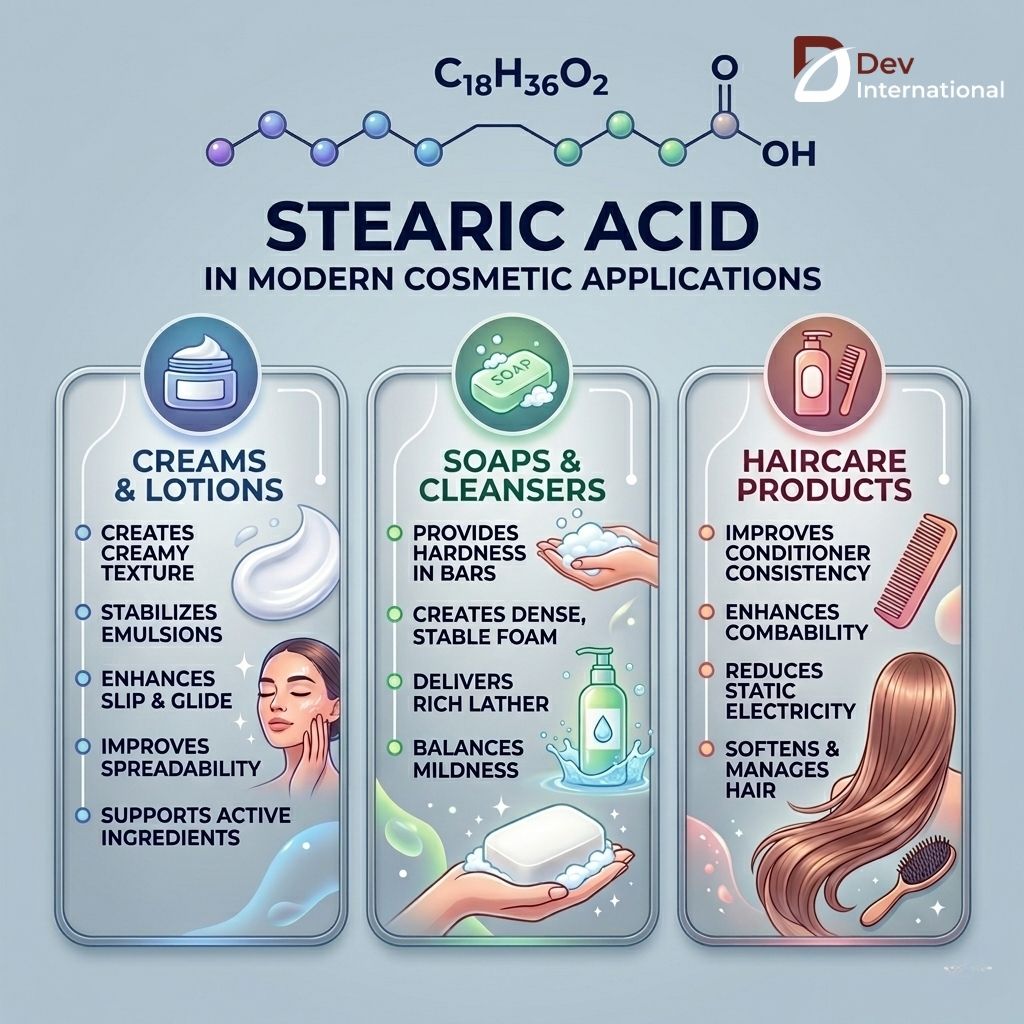
The beauty industry uses this ingredient in multiple categories. Its flexibility makes it valuable across mass-market and premium segments alike.
Creams and Lotions
Most moisturizers rely on stearic acid to create a creamy texture. It thickens the formula. It stabilizes emulsions. It improves spreadability.
When customers apply a lotion, they expect a smooth glide. They expect fast absorption. Because of its molecular structure, this fatty acid enhances slip without leaving a sticky residue.
Moreover, it supports structured formulations in anti-aging creams. These products often contain active ingredients such as retinol or peptides. A stable base ensures those activities remain evenly distributed.
Soaps and Cleansers
Traditional soap manufacturing heavily depends on this fatty acid. It contributes to hardness and longevity in bar soaps.
Additionally, it creates a dense and stable foam. Consumers associate rich lather with effective cleansing. Therefore, brands maintain it as a key ingredient in premium cleansing bars.
In facial cleansers, it works alongside surfactants to balance texture and mildness. As a result, formulas cleanse effectively while minimizing dryness.
Haircare Products
Hair conditioners require emulsion stability and smooth texture. This ingredient helps achieve both.
It improves cream consistency. It enhances combability. It also supports conditioning agents that reduce static electricity.
Consequently, hair feels softer and more manageable after use.
Stearic Acid Benefits in Skincare and Industry Uses

From a business perspective, manufacturers value ingredients that improve efficiency and reduce formulation challenges. This fatty acid delivers both advantages.
Cost Efficiency and Formulation Flexibility
Instead of adding multiple stabilizers, formulators can rely on one multifunctional ingredient. That reduces raw material complexity.
Furthermore, stearic acid blends well with various oils, waxes, and active ingredients. Therefore, research and development teams can innovate faster.
Enhanced Product Texture and Consumer Appeal
Texture drives purchase decisions. Even before customers evaluate performance, they judge feel and appearance.
Because this ingredient thickens and stabilizes formulations, it enhances sensory quality. Creams feel luxurious. Lotions appear uniform. As a result, customer satisfaction increases.
Clean Beauty and Sustainable Sourcing
Many suppliers now offer vegetable-derived stearic acid. Brands can source it responsibly from certified sustainable plantations.
Consequently, companies align with clean beauty trends while maintaining product performance.
How Stearic Acid Supports Skin Barrier Protection
Healthy skin depends on a strong lipid barrier. When this barrier weakens, moisture escapes. Irritation increases.
This fatty acid reinforces the outer layer of the skin. It fills gaps between skin cells. Therefore, moisture retention improves.
Moreover, it works synergistically with ceramides and cholesterol. Together, these lipids maintain hydration and resilience.
Because modern lifestyles expose skin to pollution and stress, barrier-supporting ingredients remain critical. That explains its continued demand in moisturizers and repair creams.
Is Stearic Acid Safe for Daily Cosmetic Use?
Safety remains a top concern for consumers and regulatory authorities. Fortunately, global regulatory bodies approve its use in cosmetics at recommended concentrations.
Toxicological assessments show low irritation potential. Additionally, it demonstrates minimal sensitization risk.
However, formulation quality matters. When chemists balance it correctly with other ingredients, it performs safely and effectively.
Common Uses of Stearic Acid Across Industries
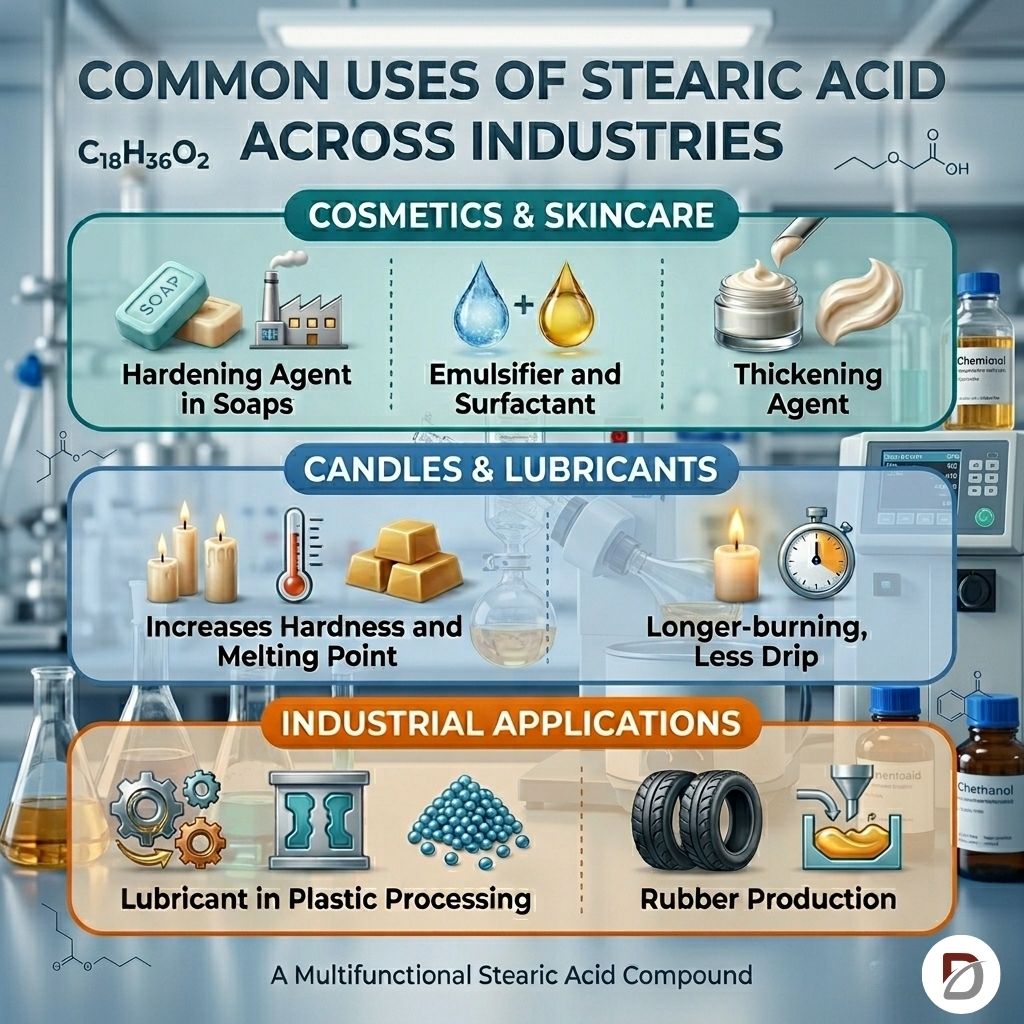
Cosmetics & Skincare:
Stearic acid plays a vital role in personal care formulations. It acts as a hardening agent in soaps, helping them maintain shape and durability. In lotions and creams, it functions as an emulsifier and surfactant, allowing oil and water to blend smoothly. Additionally, it works as a thickening agent, creating rich textures that enhance product feel and stability.
Candles & Lubricants:
In candle manufacturing, stearic acid increases hardness and raises the melting point. As a result, candles burn longer, drip less, and maintain their structure even in warmer conditions.
Industrial Applications:
Beyond cosmetics, stearic acid serves as an effective lubricant in plastic processing. It reduces friction during molding and extrusion. Furthermore, it supports rubber production by improving consistency and processing efficiency.
Comparing Stearic Acid with Alternative Cosmetic Ingredients
Some brands experiment with synthetic thickeners or petroleum-based stabilizers. Yet, these alternatives often lack the multifunctionality of this fatty acid.
Synthetic polymers may create texture. However, they do not contribute to skin barrier support.
Petroleum derivatives may stabilize emulsions. Yet, clean beauty brands increasingly avoid them.
Therefore, stearic acid offers a balanced solution between performance, safety, and sustainability.
Global Market Demand for Stearic Acid in Cosmetics
The cosmetic industry continues to expand across Asia, Europe, and North America. As skincare routines grow more sophisticated, demand for stable and effective ingredients increases.
Manufacturers seek raw materials that ensure consistency at scale. This fatty acid meets industrial requirements. At the same time, it satisfies consumer expectations.
Consequently, suppliers invest in high-purity grades suitable for premium skincare.
The Future of Stearic Acid in Beauty
The beauty industry will continue to evolve. New activities will emerge. Marketing trends will shift. However, foundational ingredients that deliver consistent results will remain essential.
Stearic acid offers multifunctionality, safety, and performance. It strengthens emulsions. It enhances texture. It supports the skin barrier. Therefore, brands that prioritize quality formulations will continue to rely on it.
If you are a cosmetic manufacturer, private label brand, or raw material distributor, choosing high-quality stearic acid can elevate your product line and strengthen market competitiveness.
FAQs of Stearic Acid
Q: What is Stearic Acid?
A: Stearic Acid is a saturated fatty acid commonly derived from vegetable oils such as palm and coconut oil. Manufacturers widely use it in cosmetics, rubber, plastics, pharmaceuticals, and candles because it improves stability, texture, and processing efficiency.
Q: What is Stearic Acid used for?
A: Industries use Stearic Acid as a thickener, emulsifier, lubricant, stabilizer, and hardening agent. In cosmetics, it enhances cream texture. In rubber manufacturing, it supports vulcanization. In plastics, it reduces friction during molding. Its multifunctional nature makes it highly valuable across sectors.
Q: Is Stearic Acid safe for skin?
A: Yes, Stearic Acid is generally safe for skin when used in regulated concentrations. It occurs naturally in the human body and helps support the skin barrier. Most skin types tolerate it well, although individuals with very sensitive skin should always patch test new products.
Q: Is Stearic Acid natural or synthetic?
A: Stearic Acid can be either plant-derived or synthetically produced. Most cosmetic and personal care brands prefer vegetable-based sources to meet clean beauty and sustainability standards.
Q: What role does Stearic Acid play in cosmetics?
A: In cosmetics, Stearic Acid acts as an emulsifier and thickening agent. It helps bind oil and water together, stabilizes formulations, and improves texture. As a result, creams feel smoother and more luxurious.