- 0 Comments
- Dev International
Sodium Methyl Paraben: Uses, Safety, and Benefits Guide
In today’s cosmetic and personal care industry, preservatives play a crucial role in maintaining product quality and safety. One ingredient that often appears on ingredient labels is sodium methyl paraben. Many consumers notice this compound in skincare products and wonder what it does, why manufacturers use it, and whether it is safe.
Understanding cosmetic ingredients helps people make better choices about the products they use daily.
In this comprehensive guide, you will learn what sodium methyl paraben is, why it is used in modern formulations, its benefits, safety considerations, and the future of preservatives in skincare products.
What Is Sodium Methyl Paraben?
Sodium methyl paraben is a water-soluble preservative commonly used in cosmetics, pharmaceuticals, and some personal care products. It is the sodium salt form of methylparaben and belongs to the paraben family of preservatives. These compounds are widely used to prevent the growth of harmful microorganisms such as bacteria, yeast, and mold in products.
Because it dissolves easily in water and works effectively in small concentrations, sodium methyl paraben helps maintain the quality, safety, and stability of many formulations used in skincare, beauty, and medical products.
Chemical Properties
Sodium methyl paraben has several chemical characteristics that make it a reliable preservative in many formulations.
- Chemical formula: C₈H₇NaO₃
- Appearance: White crystalline powder
- Solubility: Highly soluble in water
- Function: Antimicrobial preservative
- Stability: Stable across a wide pH range in cosmetic and pharmaceutical products
These properties allow it to mix easily with water-based formulations and maintain its effectiveness during the product’s shelf life.
Uses of Sodium Methyl Paraben in Cosmetics and Skincare
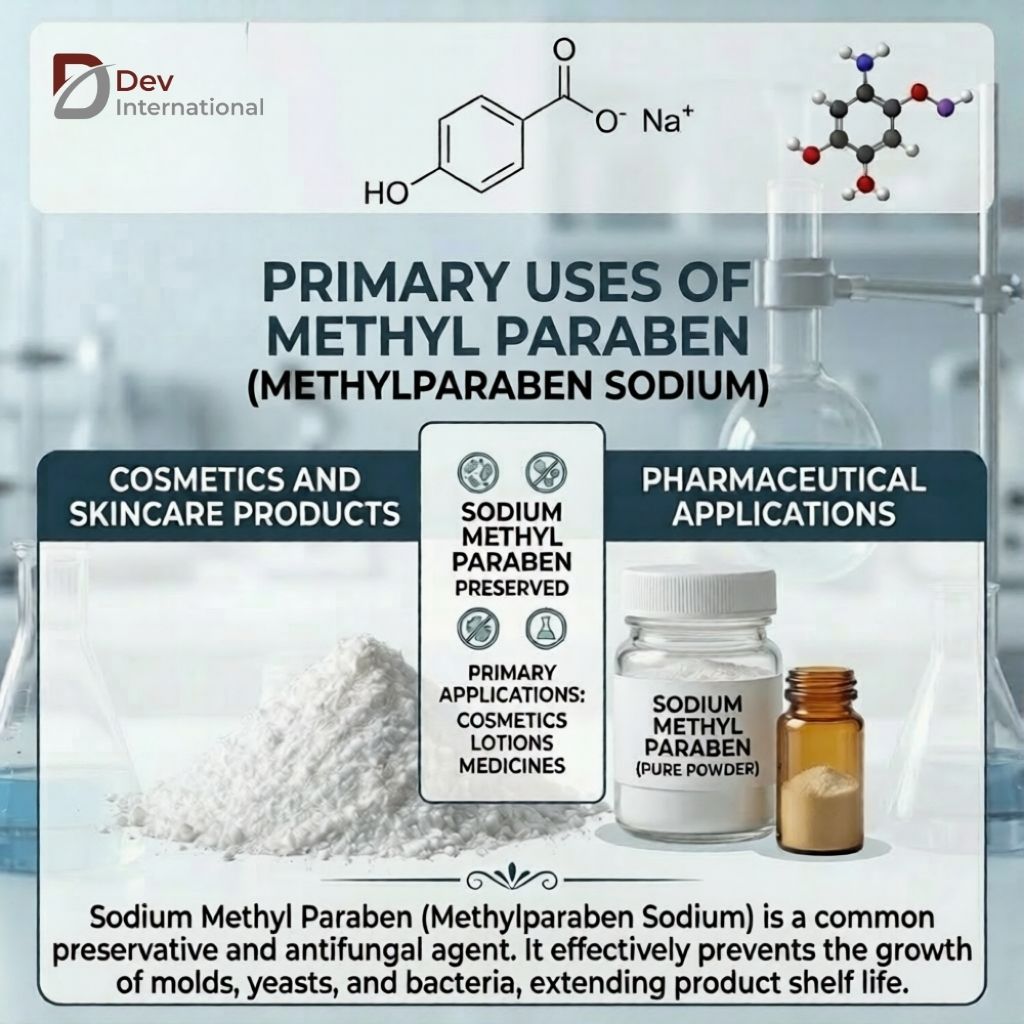
Cosmetics and Skincare Products
methyl paraben is a widely used preservative in cosmetics and skincare products. It prevents the growth of bacteria, mold, and yeast. As a result, products stay safe and stable for longer periods.
Creams
In moisturizing and face creams, Methyl Paraben helps keep the product safe from microbial contamination. This ensures that the cream remains effective and stable during storage and regular use.
Lotions
Body lotions and hand lotions often contain methyl paraben to maintain product freshness. It helps extend shelf life and keeps the formula stable even after repeated exposure to air and skin contact.
Makeup Products
Many makeup items such as foundations, concealers, and primers use methyl paraben to protect the product from bacteria and fungi. This helps maintain product quality and safety for consumers.
Pharmaceutical Applications
In the pharmaceutical industry, methyl paraben is commonly used as a preservative in certain medicines and formulations.
Medicines
Some liquid medicines and syrups contain methyl paraben to prevent microbial growth. This ensures the medicine remains safe and effective throughout its shelf life.
Topical Formulations
It is also used in topical pharmaceutical products such as medicated creams, ointments, and gels. The compound helps maintain product stability and prevents contamination during use.
Food and Industrial Uses
Although its primary use is in cosmetics and pharmaceuticals, methyl paraben may also be used in some industrial applications where preservation and stability are required. In such applications, it helps prevent microbial growth and improves the longevity of the product.
Why It Is Used in Formulations
Manufacturers use methyl paraben mainly to protect products from microbial contamination. Without preservatives, cosmetic and pharmaceutical products could quickly spoil after being exposed to air, moisture, or bacteria during normal use.
Key reasons it is widely used include the following:
- Prevents microbial growth in creams, lotions, and gels
- Extends product shelf life and maintains product quality
- Improves formulation stability in water-based products
- Works effectively at low concentrations, making it cost-efficient
Due to these advantages, sodium methyl paraben remains an important preservative in modern cosmetic and pharmaceutical formulations.
Benefits of Sodium Methyl Paraben in Product Formulations
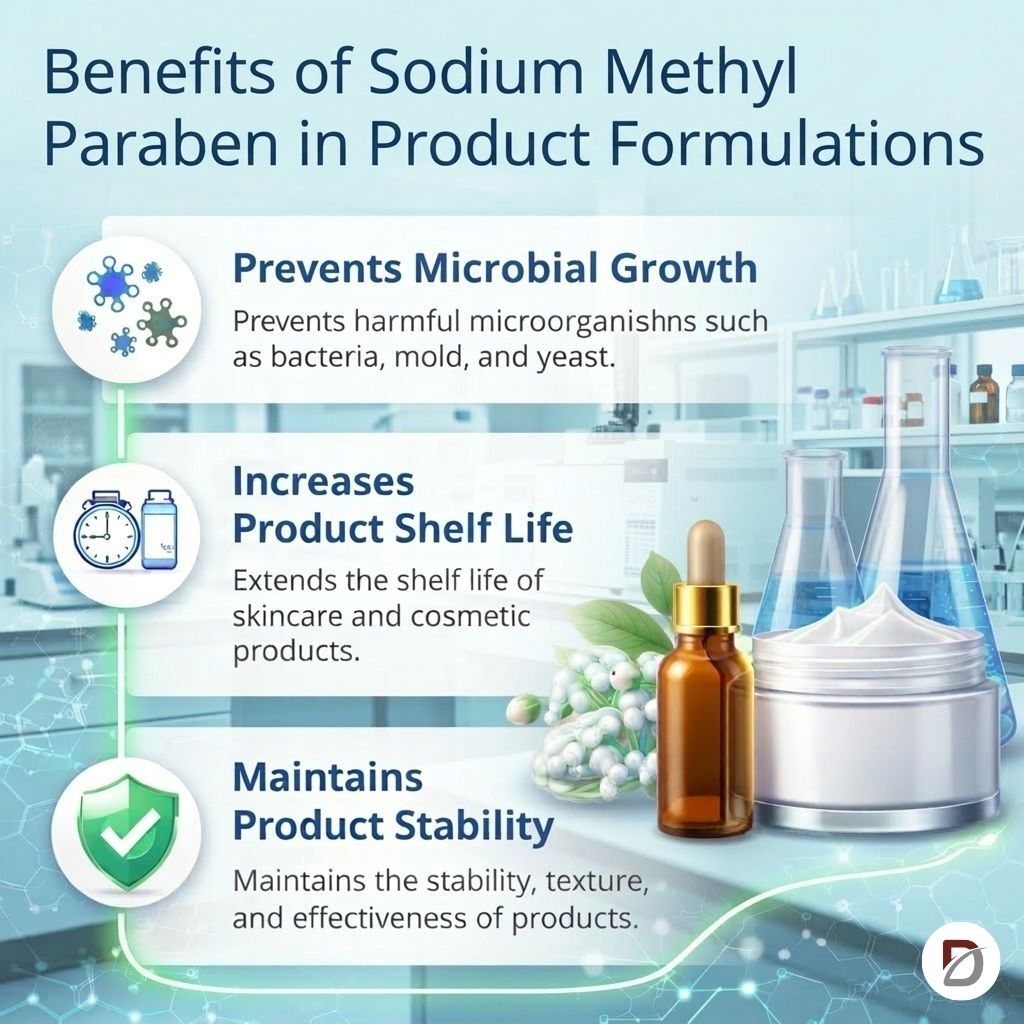
Prevents Microbial Growth
One of the main benefits of sodium methyl paraben is its ability to prevent the growth of harmful microorganisms such as bacteria, mold, and yeast. Personal care and cosmetic products often contain water and natural ingredients that can easily support microbial growth. By acting as a preservative, sodium methyl paraben helps keep these products safe and hygienic for consumers.
Increases Product Shelf Life.
Another important advantage of sodium methyl paraben is that it extends the shelf life of products. Without proper preservatives, many skincare and cosmetic items would spoil quickly. By preventing microbial contamination, this ingredient allows products to remain effective and usable for a longer period.
Maintains Product Stability
Sodium methyl paraben also helps maintain the stability and quality of formulations. It protects products from degradation caused by microorganisms, ensuring that the texture, color, and effectiveness of the product remain consistent throughout its use. This stability is important for maintaining both product performance and consumer safety.
Is Sodium Methyl Paraben Safe?
Scientific Research
Many scientific studies have evaluated the safety of sodium methyl paraben when used in cosmetics and personal care products. Research shows that when used in regulated concentrations, this ingredient functions as a safe and effective preservative. It helps prevent microbial contamination without causing significant health risks for most users.
Experts note that preservatives like Methyl Paraben I.P. / B.P. / U.S.P. are essential in many formulations because they protect products from bacteria, mold, and yeast. Without preservatives, cosmetic and skincare products could become unsafe much faster. Scientific evaluations generally conclude that the ingredient is safe when used within recommended limits.
Regulatory Approvals
Several international regulatory authorities review cosmetic ingredients to ensure consumer safety. Organizations such as the U.S. Food and Drug Administration and the European Commission monitor and regulate the use of preservatives like sodium methyl paraben in cosmetic products.
These regulatory bodies allow the use of this ingredient in cosmetics within specific concentration limits. Their evaluations are based on scientific research and safety assessments to ensure that products containing sodium methyl paraben remain safe for consumer use. As a result, it continues to be widely used in many skincare, pharmaceutical, and personal care formulations around the world.
Sodium Methyl Paraben in Modern Cosmetics
Why Brands Use It
In modern cosmetic formulations, sodium methyl paraben is widely used because of its effective preservative properties. Many skincare and beauty products contain water and active ingredients that can easily support the growth of bacteria and fungi. By adding sodium methyl paraben, brands can protect their products from contamination and maintain product safety.
Another reason companies prefer this ingredient is its stability and compatibility with different cosmetic formulations. It works well in creams, lotions, gels, and makeup products without affecting their texture, fragrance, or performance. Additionally, it is effective in very small concentrations, making it a cost-efficient preservative for manufacturers.
Alternative Preservatives
Although sodium methyl paraben is commonly used, some cosmetic brands choose alternative preservatives to meet consumer demand for paraben-free products. These alternatives can help maintain product safety while offering different formulation options.
Some commonly used alternatives include:
- Phenoxyethanol – A widely used preservative in skincare and cosmetic formulations.
- Potassium Sorbate – Often used in natural or organic cosmetic products.
- Sodium Benzoate—Commonly used in personal care and cosmetic formulations to prevent microbial growth.
Each preservative has its own advantages and limitations, and cosmetic formulators select them based on product type, stability requirements, and regulatory guidelines.
Future Trends of Sodium Methyl Paraben in India
In India, the demand for skincare and personal care products continues to grow rapidly. As consumers become more aware of product safety and effectiveness, preservative use remains a key focus for cosmetic manufacturers.
Sodium Methyl Paraben is expected to stay relevant because it offers reliable antimicrobial protection and product stability. However, Indian consumers are also showing increasing interest in paraben-free and natural preservative formulations. As a result:
Cosmetic brands are likely to balance traditional preservatives with newer, milder alternatives to meet consumer preferences.
Formulators may combine Sodium Methyl Paraben with gentler preservatives or natural options to create hybrid solutions.
Growing regulatory standards and international trends will influence Indian manufacturers to maintain safe, transparent labeling and follow strict usage limits.
Overall, while interest in alternatives rises, Sodium Methyl Paraben is expected to continue its role as an effective preservative in many formulations — especially where product safety and long shelf life are priorities.
Understanding the Importance of Sodium Methyl Paraben
Sodium methyl paraben plays an important role in the cosmetic and pharmaceutical industries as an effective preservative. It is widely used in products such as creams, lotions, makeup items, and certain medicines to prevent microbial growth and maintain product quality. By protecting formulations from bacteria, mold, and yeast, it helps ensure that products remain safe for consumers.
The benefits of methyl paraben include extending product shelf life, maintaining formulation stability, and preserving the effectiveness of skincare and cosmetic products. Scientific research and safety evaluations by organizations such as the U.S. Food and Drug Administration and the European Commission indicate that it is considered safe when used within approved limits.
Looking ahead, the future of preservatives in skincare will likely focus on balancing product safety, consumer preferences, and innovative formulations. While some brands are exploring alternative preservatives, ingredients like sodium methyl paraben continue to be valued for their reliability and effectiveness in protecting modern cosmetic products.
FAQs of Sodium Methyl Paraben
Q: What is the primary usage of sodium methyl paraben?
A: Sodium methyl paraben is used as a preservative to increase the shelf life of food, cosmetics, and pharmaceuticals and prevents bacterial and fungal growth.
Q: Is sodium methyl paraben safe for skin?
A: Yes, sodium methyl paraben is considered safe when used within approved limits. Regulatory organizations such as the U.S. Food and Drug Administration and the European Commission allow its use in cosmetic products after scientific safety evaluations.
Q: Why is sodium methyl paraben used in cosmetics?
A: Cosmetic brands use sodium methyl paraben because it effectively prevents microbial contamination. Without preservatives, products like creams and lotions could spoil quickly. Therefore, this ingredient helps maintain product quality and safety.
Q: What are the benefits of sodium methyl paraben?
A: The main benefits of sodium methyl paraben include the following:
- Prevents microbial growth
- Extends product shelf life
- Maintains product stability
- Works effectively in small concentrations
Because of these advantages, it is widely used in cosmetic and pharmaceutical formulations.
Q: Are there alternatives to sodium methyl paraben?
A: Yes, several preservatives can be used as alternatives to sodium methyl paraben. Some common options include:
- Phenoxyethanol
- Sodium Benzoate
- Potassium Sorbate
However, each preservative has different properties, so formulators choose them depending on the product type and stability requirements.