- 0 Comments
- Dev International
Understanding Lauric Acid and Its Industrial Importance
Lauric Acid is a medium-chain saturated fatty acid that plays an important role in several manufacturing industries. Companies use it as a lauric acid raw material in personal care formulations, soaps, surfactants, selected pharmaceutical applications, and food-related products where the appropriate grade meets the required specifications.
Its chemical properties and versatility make it a valuable ingredient for manufacturers seeking dependable materials for commercial production.
As industries continue to develop specialised formulations, buyers need to understand more than an ingredient’s basic function. They must also consider quality specifications, compatibility, grade requirements, documentation, and supply consistency.
Whether you work in personal care, pharmaceuticals, food processing, or chemical manufacturing, understanding this fatty acid can help you evaluate its suitability for your production requirements.
What Is Lauric Acid?
Lauric Acid, also known as dodecanoic acid, is a saturated fatty acid containing 12 carbon atoms. Its chemical formula is C₁₂H₂₄O₂. It occurs naturally in several plant-derived fats and oils, particularly coconut oil and palm kernel oil.
At room temperature, pure Lauric Acid generally appears as a white or off-white solid. It has a waxy character and a melting point of approximately 44°C, although the exact properties of a commercial product depend on its purity and specification.
Manufacturers value this fatty acid because it serves as a starting material for various chemical processes. For example, producers can use it to manufacture soaps, fatty acid derivatives, and ingredients for surfactant systems. However, the final application depends on the grade, processing requirements, and intended product.
Key Properties of Lauric Acid
Understanding its properties helps product developers determine whether it fits their formulation or manufacturing process.
- Chemical name: Dodecanoic acid
- Chemical formula: C₁₂H₂₄O₂
- Carbon chain length: 12 carbon atoms
- Classification: Saturated medium-chain fatty acid
- Typical appearance: White or off-white solid
- Common sources: Coconut oil and palm kernel oil
- Industrial relevance: Soap production, surfactants, personal care ingredients, and selected chemical applications
Commercial buyers should verify the supplier’s technical data sheet and certificate of analysis before selecting a product. Specifications such as purity, acid value, moisture, colour, and other quality parameters may influence its suitability for a particular process.
Where Does Lauric Acid Come From?
Manufacturers commonly obtain this fatty acid from coconut oil or palm kernel oil. Producers process these oils to separate fatty acid fractions and then refine the material to achieve the required specifications.
The final quality depends on the raw material, processing method, purification steps, and quality control procedures. Consequently, buyers should not assume that every product labelled Lauric Acid will have identical properties or meet the same industry requirements.
Lauric Acid Benefits for Manufacturers
Lauric Acid offers several practical advantages as a manufacturing raw material. However, the benefits depend on the formulation, production method, and grade selected.
1. Versatile Raw Material for Chemical Processing
Manufacturers use this fatty acid as a starting material for producing other chemicals and ingredients. Its molecular structure makes it suitable for selected reactions that create fatty acid derivatives.
As a result, it can support different manufacturing processes, particularly where formulators need a defined fatty acid chain length.
2. Useful in Soap and Surfactant Production
Lauric Acid can contribute to the production of soaps and surfactant ingredients. When manufacturers react with a suitable alkali, they can produce laurate salts, which have cleansing and surface-active properties.
These materials can support formulations that require cleansing, foaming, or emulsification, depending on the resulting ingredient and the complete formulation.
3. Supports Personal Care Product Development
Personal care manufacturers use fatty acid derivatives in a wide range of products, including cleansing formulations, soaps, and selected cosmetic ingredients. Lauric Acid can serve as a raw material in developing these ingredients.
However, the pure fatty acid does not perform the same role as every derivative made from it. Formulators must distinguish between Lauric Acid itself and ingredients such as laurates or other surfactant derivatives.
4. Provides Options for Specialised Formulations
Different industries require different raw material characteristics. Lauric Acid offers manufacturers a defined fatty acid structure that can suit selected formulation and processing needs.
In addition, a consistent supply specification can help procurement teams standardise raw material inputs and maintain better control over production.
Applications of Lauric Acid
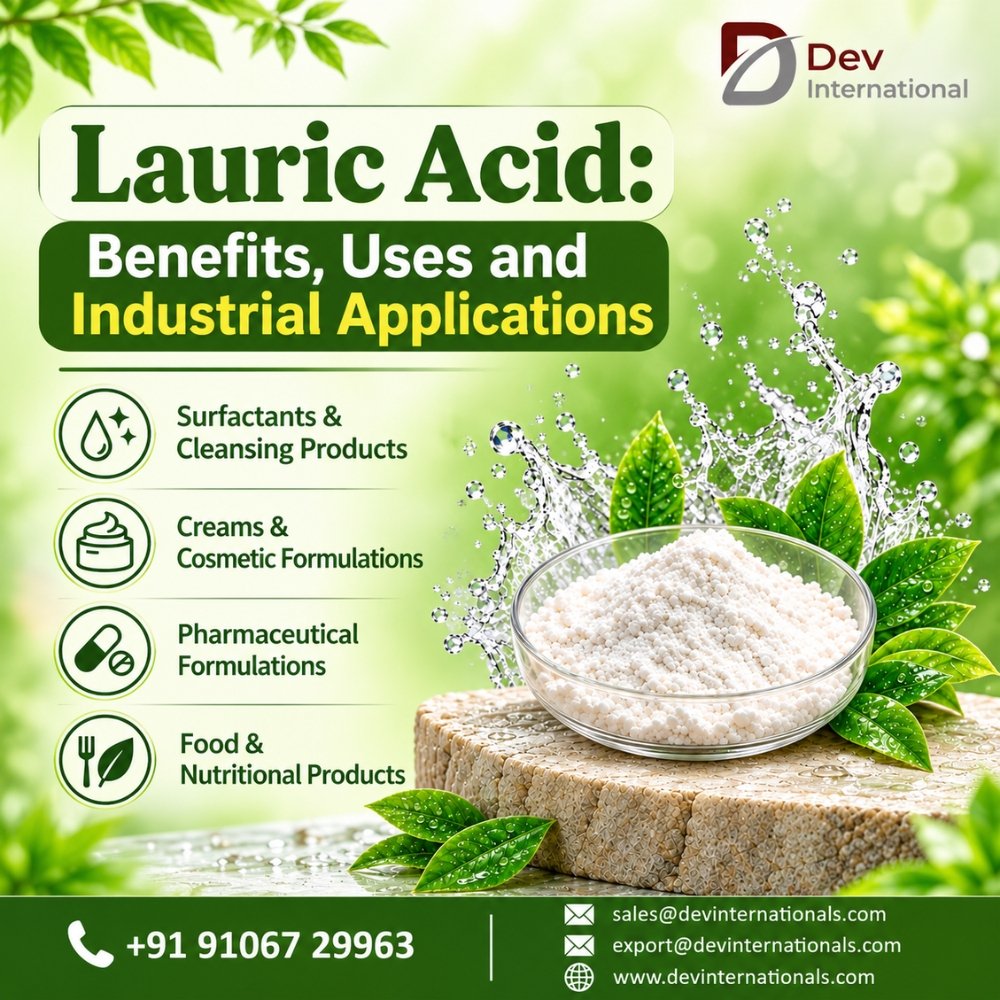
Lauric acid (dodecanoic acid) is a saturated, medium-chain fatty acid widely utilized across the cosmetic, food, pharmaceutical, and industrial sectors due to its versatile antimicrobial, structural, and emulsifying properties.
The primary applications detailed in the text are organized into four key areas:
1. Cosmetic and Personal Care Industry
Lauric acid serves as a prominent ingredient in skincare, haircare, and personal hygiene products because of its texture-enhancing and purifying attributes:
Soaps & Cleansers: Functions as an effective foaming agent that enhances lathering and cleansing efficiency.
Shampoos & Conditioners: Tames frizz and provides a smooth texture to hair fibers.
Moisturizers: Boosts hydration levels, leaving skin feeling soft and supple.
Antimicrobial Products: Offers antibacterial and antifungal benefits specifically beneficial for acne-prone skin.
Deodorants: Reduces body odor by acting as a natural antibacterial barrier.
2. Food Industry
In food science and manufacturing, lauric acid acts as a functional precursor and direct additive:
Emulsifiers: Stabilizes formulations in processed foods to lock in consistent texture and appearance.
Nutritional Supplements: Serves as a key component in medium-chain triglyceride (MCT) products targeted at health and fitness benefits.
Preservatives: Inhibits microbial activity to safely extend the shelf life of food products.
3. Pharmaceutical Industry
Its targeted therapeutic and delivery properties make it highly valuable in medicinal formulations:
Topical Ointments: Integrated into formulations designed to treat active skin infections and minor wounds.
Drug Delivery: Operates as an inactive excipient to safely deliver active pharmaceutical ingredients (APIs).
4. Industrial Applications
On a larger scale, lauric acid is a fundamental raw material used in chemical manufacturing:
Soaps & Detergents: Improves the overall washing performance and lather production of commercial cleaners.
Plastics & Rubbers: Adds flexibility and heat stability when used as a plasticizer and stabilizer during processing.
Lubricants: Minimizes operational friction within complex mechanical systems.
How to Select the Right Lauric Acid Grade
Choosing the correct grade is essential for maintaining product quality and meeting industry requirements. Manufacturers should assess the intended application before comparing suppliers or prices.
Check the Technical Specifications
Review the technical data sheet and certificate of analysis for parameters relevant to your process. These may include purity, acid value, moisture, colour, melting point, and other specification limits.
The most important parameters depend on the product you intend to manufacture. Therefore, compare the supplier’s specifications directly with your internal requirements.
Confirm the Intended Application
Personal care, pharmaceutical, food-related, and industrial applications may have different quality and documentation requirements. Confirm that the grade meets the standards for your intended use before placing an order.
Where applicable, request supporting documentation that demonstrates compliance with the required standards.
Evaluate Packaging and Storage
Packaging should protect the material from contamination and unsuitable environmental conditions. Buyers should review available pack sizes, storage instructions, shelf-life information, and transport arrangements.
Proper storage and handling help maintain the product’s specified quality during warehousing and production.
Compare Supplier Reliability
Price matters, but it should not be the only purchasing factor. Buyers should also consider specification consistency, documentation, order quantities, delivery timelines, communication, and supply continuity.
A supplier that provides clear technical information and dependable commercial support can help manufacturers plan procurement more effectively.
Frequently Asked Questions
1: What is Lauric Acid mainly used for?
Lauric Acid serves as a raw material in soap production, surfactant manufacturing, personal care ingredient development, and selected chemical processes. Other applications depend on the grade and applicable requirements.
2: What is the chemical formula of Lauric Acid?
Its chemical formula is C₁₂H₂₄O₂. It is also known as dodecanoic acid because it contains 12 carbon atoms.
3: What Are the Main Uses of Lauric Acid?
Lauric Acid is commonly used in soap manufacturing, surfactant production, personal care ingredient development, and selected chemical processes. Its suitability for pharmaceutical or food-related applications depends on the grade, specifications, and applicable regulations.
4: What Are the Benefits of Lauric Acid for Manufacturers?
Lauric Acid offers manufacturers a versatile raw material for producing soaps, fatty acid derivatives, and selected surfactant ingredients. Its defined chemical structure also helps manufacturers select suitable materials for specific production processes.
5: Which Industries Use Lauric Acid?
Several industries use Lauric Acid, including personal care, cosmetics, soap manufacturing, chemical processing, and selected pharmaceutical and food-related applications. Each industry requires an appropriate grade and supporting quality documentation.
6: Is Lauric Acid Used in Cosmetics?
Yes, cosmetic manufacturers may use Lauric Acid in selected formulations or as a starting material for producing other cosmetic ingredients. Formulators should assess ingredient compatibility, product stability, skin tolerability, and applicable cosmetic regulations.
Lauric Acid for Quality Focused Manufacturing Solutions
Lauric Acid is a versatile fatty acid that supports several manufacturing processes, particularly soap production, surfactant development, personal care ingredient manufacturing, and selected chemical applications. Its usefulness comes from its defined molecular structure and its role as a raw material for producing other ingredients.
However, not every grade suits every industry. Manufacturers should verify specifications, review quality documentation, confirm application requirements, and evaluate supply reliability before making a purchasing decision.
For companies seeking dependable raw materials, a structured supplier evaluation process can help support consistent production and informed sourcing. Before placing an order, request the relevant technical documents and confirm that the material meets your quality and regulatory requirements.