- 0 Comments
- Dev International
Kojic Acid for Skincare Brands and Cosmetic Manufacturers
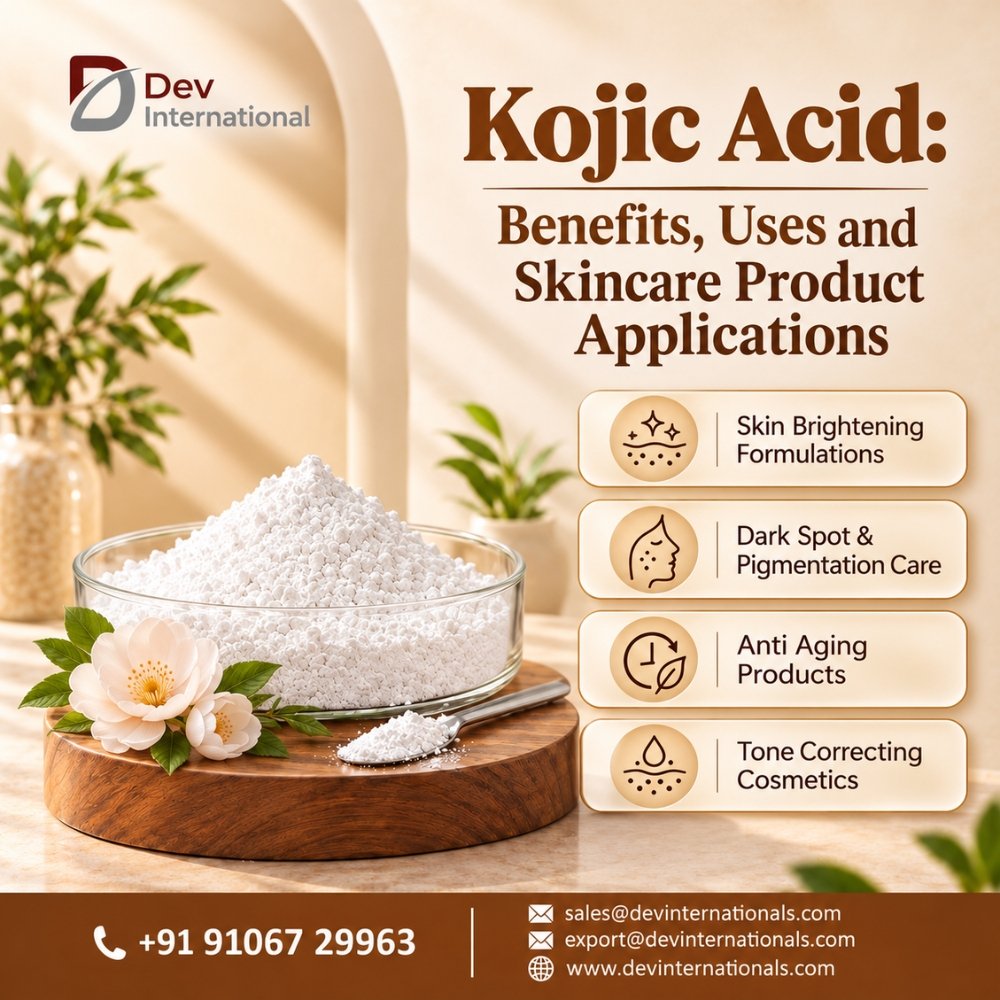
Kojic Acid has become a widely discussed ingredient in skincare and cosmetic formulations because of its role in products designed to improve the appearance of uneven skin tone and dark spots.
Cosmetic formulators use it in selected kojic acid creams, serums, lotions, and other personal care products, depending on the formulation requirements and applicable regulations.
As consumer interest in targeted skincare continues to grow, manufacturers increasingly need reliable information about ingredient properties, formulation compatibility, product stability, and quality specifications.
However, successful product development involves more than choosing a popular ingredient. Cosmetic manufacturers must consider concentration, pH, packaging, storage conditions, ingredient compatibility, and the intended use of the finished product. Understanding these factors helps brands develop formulations that meet their quality standards and consumer expectations.
Whether you are researching cosmetic ingredients, developing a skincare product, or sourcing raw materials for commercial production, learning about the applications and limitations of Kojic Acid can support better formulation and purchasing decisions.
What Is Kojic Acid?
Kojic Acid is an organic compound produced by certain fungi during fermentation processes. It has attracted attention in cosmetic science because of its interaction with tyrosinase, an enzyme involved in melanin production. Melanin contributes to the colour of human skin, hair, and eyes.
In skincare formulations, manufacturers may use this ingredient in products designed to improve the appearance of hyperpigmentation, dark spots, and uneven skin tone. Nevertheless, the final performance depends on the formulation, ingredient quality, concentration, skin condition, and how the product is used.
Cosmetic formulators must also distinguish between the ingredient’s properties and the claims they make about the finished product. A raw material does not automatically guarantee a particular cosmetic outcome.
Key Properties of Kojic Acid
Understanding its general properties helps formulators determine whether it suits their product development goals.
- Ingredient type: Organic compound
- Origin: Commonly associated with certain microbial fermentation processes
- Cosmetic interest: Formulations targeting the appearance of uneven skin tone
- Formulation considerations: Stability, pH, concentration, compatibility, and packaging
- Common product formats: Selected creams, serums, lotions, and other topical cosmetic products
The precise quality parameters depend on the supplied grade. Therefore, buyers should review the technical data sheet, certificate of analysis, and relevant safety documentation before selecting a material for commercial use.
How Does Kojic Acid Work in Skincare?
Tyrosinase plays a role in the biochemical pathway responsible for melanin production. Kojic Acid can interact with this enzyme, partly through its ability to bind copper ions involved in enzyme activity. This mechanism explains why researchers and cosmetic formulators have investigated its use in products designed for the appearance of hyperpigmentation.
However, the ingredient’s effect depends on several factors, including concentration, delivery system, formulation stability, and individual skin characteristics. Consequently, manufacturers should avoid presenting a cosmetic ingredient as a guaranteed treatment for every type of pigmentation.
Kojic Acid Benefits and Skincare Applications
The main cosmetic interest in Kojic Acid relates to products designed to improve the appearance of uneven skin tone. Formulators may incorporate it into targeted skincare products when the ingredient, formulation, and intended claims meet applicable requirements.
1. Supports Products for Uneven Skin Tone
Uneven skin tone can develop for different reasons, including sun exposure, post-inflammatory changes, and hormonal influences. Skincare brands may formulate products containing Kojic Acid to target the appearance of selected dark spots and areas of uneven pigmentation.
Nevertheless, results vary from person to person. Manufacturers should communicate realistic cosmetic benefits rather than promise complete or permanent removal of pigmentation.
2. Helps Formulate Dark Spot Care Products
Dark spot care represents one of the best-known cosmetic applications of this ingredient. Product developers may consider it for targeted serums, creams, and lotions intended to improve the appearance of selected areas of discolouration.
At the same time, a finished product must undergo appropriate stability and safety evaluations. Its effectiveness also depends on the overall formulation and the user’s skincare routine.
3. Supports Targeted Skincare Formulations
Modern skincare products often combine several ingredients to address different consumer needs. Depending on compatibility and product design, formulators may evaluate Kojic Acid alongside moisturising ingredients, humectants, or other cosmetic actives.
However, combining ingredients requires technical assessment. Some combinations can affect stability, colour, pH, or skin tolerability. Therefore, formulation testing should guide ingredient selection rather than marketing trends alone.
4. Offers Opportunities for Cosmetic Product Development
For skincare brands, the ingredient can provide an option when developing products focused on the appearance of pigmentation and uneven tone. Manufacturers can explore different product formats, textures, and packaging options to suit their intended customer segment.
In addition, brands can differentiate their products through thoughtful formulation design, suitable packaging, clear directions, and responsible cosmetic claims.
Common Uses of Kojic Acid in Cosmetic Formulations
Cosmetic manufacturers can consider several product categories when evaluating the ingredient. The choice depends on the desired product experience, formulation feasibility, target market, and applicable regulatory requirements.
Kojic Acid in Face Serums
Face serums typically offer lightweight textures and targeted application. Formulators may evaluate this ingredient for serums intended for the appearance of uneven skin tone.
Because a serum often contains a high proportion of water or other solvents, developers should assess solubility, pH, compatibility, colour changes, and stability throughout the product’s intended shelf life. Suitable packaging can also help protect the formulation from environmental exposure.
Kojic Acid in Face Creams
Creams provide a different product experience because they may contain oils, emollients, emulsifiers, and moisturising agents. Formulators must ensure that the active ingredient remains compatible with the selected base and manufacturing process.
Furthermore, the finished cream should maintain its intended texture, appearance, and performance during storage. Stability testing helps manufacturers identify changes that could affect product quality.
Kojic Acid in Lotions
Lotions offer a spreadable format for cosmetic applications. When developing a lotion, formulators need to assess ingredient distribution, pH, viscosity, packaging, and product stability.
The finished formulation should also provide clear usage instructions and appropriate warnings where required. This approach helps brands deliver a more consistent consumer experience.
Kojic Acid in Targeted Spot Care Products
Some skincare products focus on applying a small amount to selected areas. These formats require careful consideration of application instructions, concentration, skin tolerability, and the intended cosmetic claims.
Manufacturers should also avoid assuming that a product suitable for one skin area or user group will automatically suit every other application.
How to Choose a Kojic Acid Supplier
For cosmetic manufacturers, selecting a dependable raw material supplier helps support quality management and production planning. Buyers should assess more than the quoted price before making a purchasing decision.
Review Technical Documentation
Ask the supplier for the technical data sheet, certificate of analysis, safety data sheet, and any additional documentation required for your application. Review the specifications against your formulation requirements.
Confirm Grade and Quality Requirements
Ensure that the supplied material meets the quality parameters needed for the intended cosmetic use. Buyers should verify identity, purity-related specifications, and other relevant parameters using the supplier’s documentation and their own quality procedures.
Assess Packaging and Storage Recommendations
Check the packaging format, transport conditions, shelf-life information, and storage recommendations. Proper handling can help maintain the material’s quality during warehousing and production.
Compare Commercial Terms
When evaluating a Kojic Acid manufacturer or supplier, consider minimum order quantities, available pack sizes, lead times, pricing, delivery terms, and supply continuity.
A low purchase price may not offer the best overall value if documentation, consistency, or delivery reliability falls short of production requirements.
Frequently Asked Questions
1: What is Kojic Acid mainly used for in cosmetics?
Cosmetic formulators may use it in selected skincare products designed to improve the appearance of dark spots and uneven skin tone. Its suitability depends on the formulation, quality specifications, safety assessment, and applicable regulations.
2:Can Kojic Acid be used in face creams and serums?
Yes, formulators may consider it for selected creams and serums. However, they must evaluate compatibility, stability, concentration, packaging, and skin tolerability before commercial production.
3: Is Kojic Acid suitable for every skin type?
Not necessarily. Individual skin sensitivity varies, and topical products can cause irritation in some users. Finished-product safety assessment, clear instructions, and appropriate consumer guidance remain important.
4: What affects the stability of Kojic Acid formulations?
Stability can depend on pH, formulation ingredients, processing conditions, light exposure, temperature, oxygen, and packaging. Manufacturers should assess the complete formulation rather than relying on ingredient properties alone.
5: What should buyers check before purchasing Kojic Acid?
Buyers should review the technical data sheet, certificate of analysis, safety data sheet, grade suitability, packaging, storage requirements, and supplier reliability. They should also confirm compliance with the regulations applicable to their intended market.
6: How can cosmetic manufacturers select a suitable supplier?
Manufacturers should compare quality documentation, specification consistency, supply capacity, packaging options, commercial terms, and technical support. A supplier should provide clear information that helps buyers assess the material for their intended application.
Final Thoughts on Kojic Acid Benefits and Applications
Kojic Acid has an established place in discussions about cosmetic formulations designed for the appearance of dark spots and uneven skin tone. Its potential applications include selected serums, creams, lotions, and targeted skincare products. Nevertheless, successful product development requires more than ingredient selection.
Manufacturers should evaluate formulation compatibility, pH, stability, packaging, skin tolerability, and regulatory requirements before launching a finished product. In addition, quality documentation and reliable sourcing can help purchasing teams make better-informed decisions.
For businesses developing skincare and personal care products, a systematic approach to ingredient selection supports product quality and responsible claims. Before purchasing, request the relevant technical documentation and confirm that the material meets your formulation and market requirements.